
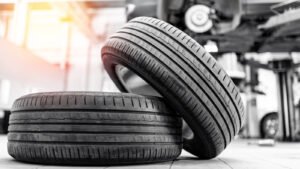
For decades, motorists and service technicians have adhered to an informal guideline known as the ‘five-year rule’ when assessing tire replacement intervals. The general consensus suggested that regardless of remaining tread depth, rubber compounds degrade over time to a point where vehicle safety becomes compromised. However, modern manufacturing techniques and storage standards are prompting a closer examination of whether calendar age alone dictates a tire’s usable lifespan.
Understanding Rubber Degradation
Rubber inherently undergoes chemical changes as it ages. Environmental factors such as ultraviolet light exposure, severe temperature fluctuations, atmospheric ozone, and contact with road debris accelerate oxidation. This process causes the elastomeric material to harden and gradually lose its flexibility. Even when the tread on a low-mileage vehicle appears virtually unworn, structural compound degradation can develop below the surface over prolonged periods.
Beyond the Calendar
Despite persistent reliance on a fixed five-year expiration timeline, actual tire longevity depends heavily on real-world usage and maintenance. Storage conditions play a vital role; tires kept in temperature-regulated, dark environments degrade at a significantly slower rate than those mounted on vehicles parked continuously in direct sunlight and subjected to harsh weather cycles. Factors such as proper inflation levels, load weights, and driving habits also heavily influence overall degradation rates.
Automotive Significance
For vehicle owners and fleet operators, accurately evaluating tire health is critical to road safety and cost management. Relying exclusively on chronological age can lead to premature discarding of perfectly viable rubber, or conversely, misplaced confidence in older tires that display adequate tread depth despite hidden compound breakdown. Thorough physical inspections for sidewall cracking, rubber hardening, and structural deformities remain the most reliable indicators of roadworthiness.