
The tire pressure warning light often appears on a cold morning, just as you’re pulling out of the driveway. A drop in temperature can lower tire pressure, but the light can also point to a puncture or another leak. Either way, treat it as a prompt to check the tires rather than a warning to ignore.
Start with a safe check
If a tire looks visibly low, or the car pulls, vibrates, or feels unstable, find a safe place to stop and inspect it. Don’t drive on a tire that appears flat; use roadside assistance or the spare if your vehicle has one and you can change it safely. If the tires look normal and the car feels steady, drive cautiously to a nearby place where you can check the pressure.
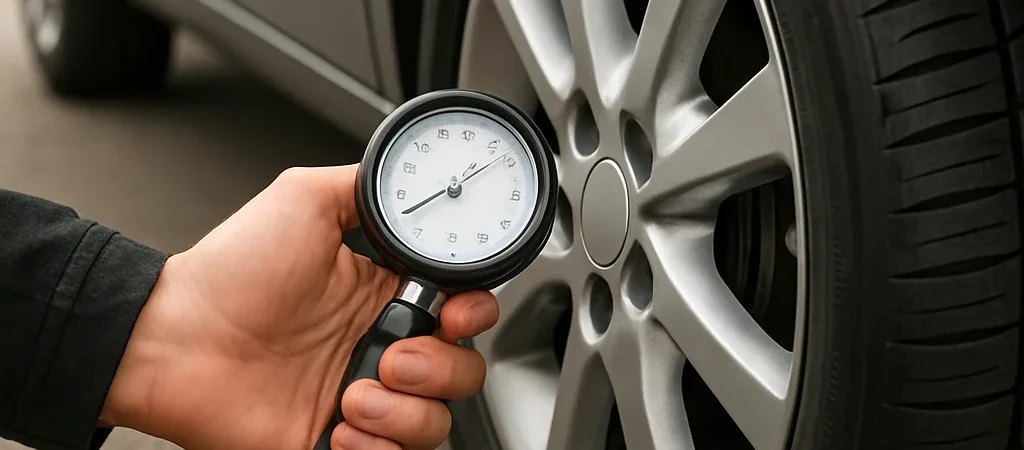
Use a tire pressure gauge when the tires are cold, ideally before driving or after the car has been parked for a few hours. The correct pressure is listed on the driver-side door-jamb label or in the owner’s manual. The number molded into a tire’s sidewall is generally its maximum pressure, not the recommended setting for your vehicle.
Add air, then recheck
At an air pump, add air in short bursts and check the pressure again with a gauge. A pump’s built-in reading can be useful, but it’s worth confirming the result rather than relying on guesswork. Set each tire to the vehicle’s specified pressure, including the spare if your manual says it has a pressure monitoring sensor.
After inflating the tires, the light may take a short drive to switch off, depending on the vehicle. If it stays on, returns soon, or flashes before remaining lit, check the owner’s manual and arrange an inspection; the tire pressure monitoring system may need attention, or a tire may still be losing air. A quick pressure check can tell you whether this is a routine adjustment or a reason to stop driving.